Discover the Chikyu: Ratings & Maritime News
IMO: 9234044
Drilling Ship, Japan
Photos
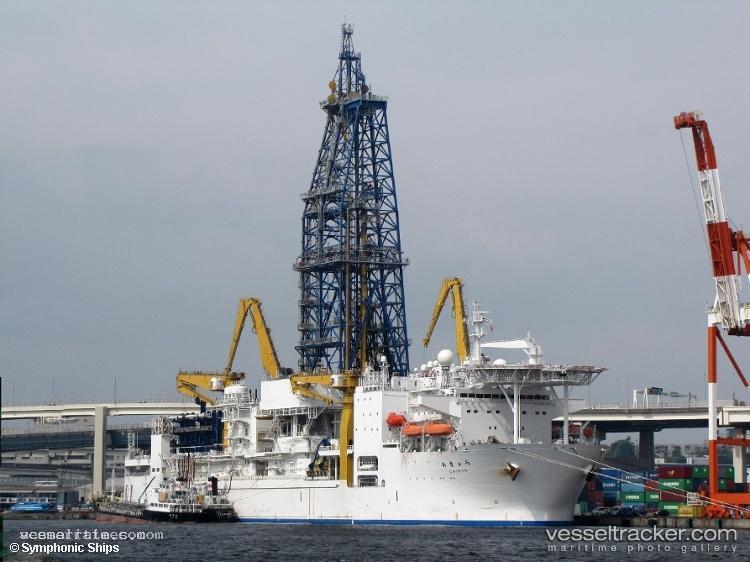
Vessel Details
MMSI
432522000
Callsign
JRAJ
Width
38.0 m
Length
210.0 m
Reviews (1)
Bobby
2024-02-27
Position: Chief Officer
Advantages:
Looking for information about this vessel. Has anyone worked on this vessel? How was the atmosphere onboard?
Disadvantages:
No personal experience yet, just gathering info.
Featured Review Articles
Challenges and Achievements of the Chikyu in Deep-Sea Exploration
Chikyu, Japan's premier deep-sea research vessel, continues to be at the forefront of exploration despite recent setbacks in its ambitious drilling ventures. The vessel's latest attempt to penetrate the fault line at the Nankai Trough, reaching depth...
Read Full ReviewLatest News (3)
Chikyu Drill Ship's Ambitious Mission Falls Short of Earthquake Zone
In a significant setback for seismic research, the Japan-based drill ship "Chikyu" has been unable to reach its target depth of 5,200 meters beneath the ocean floor, where tectonic plates collide and trigger massive earthquakes. This update was shared during a May 28 meeting of the Japan Geosciences Union held in Chiba. Tracing back to February, the drilling team faced persistent issues with collapse at just over 3,250 meters beneath the seabed, prompting engineers to reevaluate their approach. Next month, the board responsible for overseeing the operations of "Chikyu" will convene in Kobe to assess the unsuccessful drilling campaign. Additionally, the Japan Agency for Marine-Earth Science and Technology, which includes the MarE3 initiative, is establishing an independent review panel to delve into the complications that arose. The plate boundary involved is located at such depths that no other scientific ocean-drilling vessel possesses the capability of reaching it like the "Chikyu." Employing a unique riser system akin to that utilized in oil extraction, the ship aims to stabilize its drilling equipment as it penetrates through water, the sea floor, and beyond. During an October 2018 expedition, the "Chikyu" made its fourth journey to the C0002 site in the Nankai Trough, previously achieving a record for the deepest scientific ocean drilling. The subsequent phase of drilling, however, proved to be exceedingly challenging due to the fractured rocks encountered. These geological formations often gave way vertically, disrupting the path of the drill. Despite the MarE3 team managing to deepen the hole from slightly over 2,900 meters to 3,262 meters—setting a new milestone—the team eventually could not advance further. Even with steel linings installed to reinforce the drilling hole, it continued to collapse at its depths. The crew attempted to sidetrack from the main hole—a technique commonly used in oil and gas but rare in scientific ocean drilling. Unfortunately, every subsequent attempt to establish new branches also resulted in failures. After multiple unsuccessful attempts, the team had to cut the drill pipe and cease operations for good, citing possible reasons such as unexpectedly heavy mud circulating within and around the drilling mechanism, as well as the potential destabilization caused by tiny rock fractures. Adjustments had already been made to the drilling techniques to accommodate the increased weight of the mud, including reinforcing the rock face with fiber materials. Following the disheartening results at C0002, the "Chikyu" pivoted to drilling shallower sites without the riser. Despite these challenges, the vessel has made significant contributions over the years, including studies on extreme heat tolerance in deep-sea sediments and investigations into the geological aspects of the shallow fault responsible for the catastrophic 2011 Tohoku earthquake. Looking ahead, while the future drilling schedule of the "Chikyu" remains uncertain, there is still optimism about ultimately reaching the 5,200-meter target. Insights gained from the C0002 drilling attempt are expected to pave the way for advancements in deep-sea drilling methodologies. Once project evaluations are concluded, the "Chikyu" team will deliberate on requesting additional funding from the Japanese government for another attempt. The recent expedition incurred operational costs of approximately USD 55 million. Nevertheless, any new efforts will require starting fresh, as the C0002 site is now deemed irreparable.
Japanese Drilling Vessel Chikyu Achieves Unprecedented Depth Beneath Seafloor
The Chikyu, a state-of-the-art Japanese drilling vessel, has achieved a remarkable milestone by drilling an astounding depth of 6,926 feet (2,111 meters) beneath the seafloor. This groundbreaking endeavor marks the deepest drilling ever accomplished in oceanic settings. The Japan Agency for Marine-Earth Science and Technology, which spearheads this expedition, made the announcement on September 6, 2012. Located off the Shimokita Peninsula, the drilling operation began in July and is anticipated to extend for an additional three weeks, contributing valuable insights into our planet’s geological mysteries.
CHIKYU Research Vessel Launches Investigation into Great East Japan Earthquake Off Miyagi Coast
In a significant advancement for geological research, the renowned deep-sea research vessel CHIKYU has commenced drilling operations off the coast of Miyagi Prefecture. This initiative aims to unravel the mysteries surrounding the triggers of the catastrophic Great East Japan Earthquake and the subsequent tsunami that struck on March 11, 2011. As of this Monday, the CHIKYU, a robust 56,700-ton vessel operated by the Japan Agency for Marine-Earth Science and Technology, has successfully lowered its drill pipe to an impressive depth of approximately 5,000 meters within the depths of the ocean, which reach 6,910 meters. As part of its mission, the CHIKYU plans to bore two holes reaching 1,000 meters beneath the seabed to install high-precision thermometers. This data will be essential for understanding the movement of geological faults in the region, which are believed to be responsible for the intense seismic activity, including the tsunami’s triggering, as it will allow researchers to analyze the residual frictional heat present in the rock formations from the earthquake.
Frequently Asked Questions
🌊 Did Chikyu sink or have any sinking incidents?
Based on available news reports, Chikyu has been mentioned in connection with sinking-related incidents. There have been 1 news reports mentioning sinking incidents. For detailed information about specific incidents, please refer to the latest news section above.
🛠️ Did Chikyu experience any breakdowns or mechanical failures?
Based on available news reports, Chikyu has been mentioned in connection with breakdown-related incidents. There have been 1 news reports mentioning breakdowns. For detailed information about specific incidents, please refer to the latest news section above.
⚙️ Did Chikyu have any engine problems?
Based on available news reports, Chikyu has been mentioned in connection with engine-related incidents. There have been 1 news reports mentioning engine problems. For detailed information about specific incidents, please refer to the latest news section above.
💥 Was Chikyu involved in any collisions?
Based on available news reports, Chikyu has been mentioned in connection with collision-related incidents. There have been 2 news reports mentioning collisions. For detailed information about specific incidents, please refer to the latest news section above.
🛢️ Did Chikyu have any oil spills or pollution incidents?
Based on available news reports, Chikyu has been mentioned in connection with spill-related incidents. There have been 1 news reports mentioning spills. For detailed information about specific incidents, please refer to the latest news section above.
Add a Crew Review
Similar Vessels You Might Be Interested In