Discover the G.o.sars: Ratings & Maritime News
IMO: 9260316
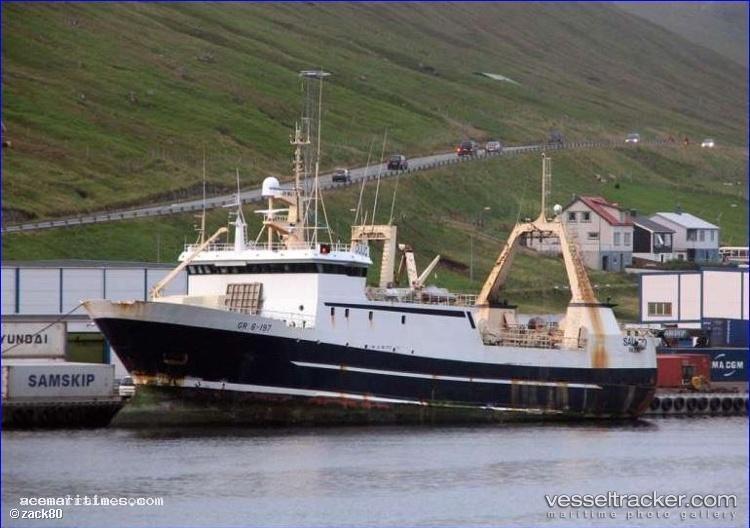
Fishing Vessel, Norway
Photos
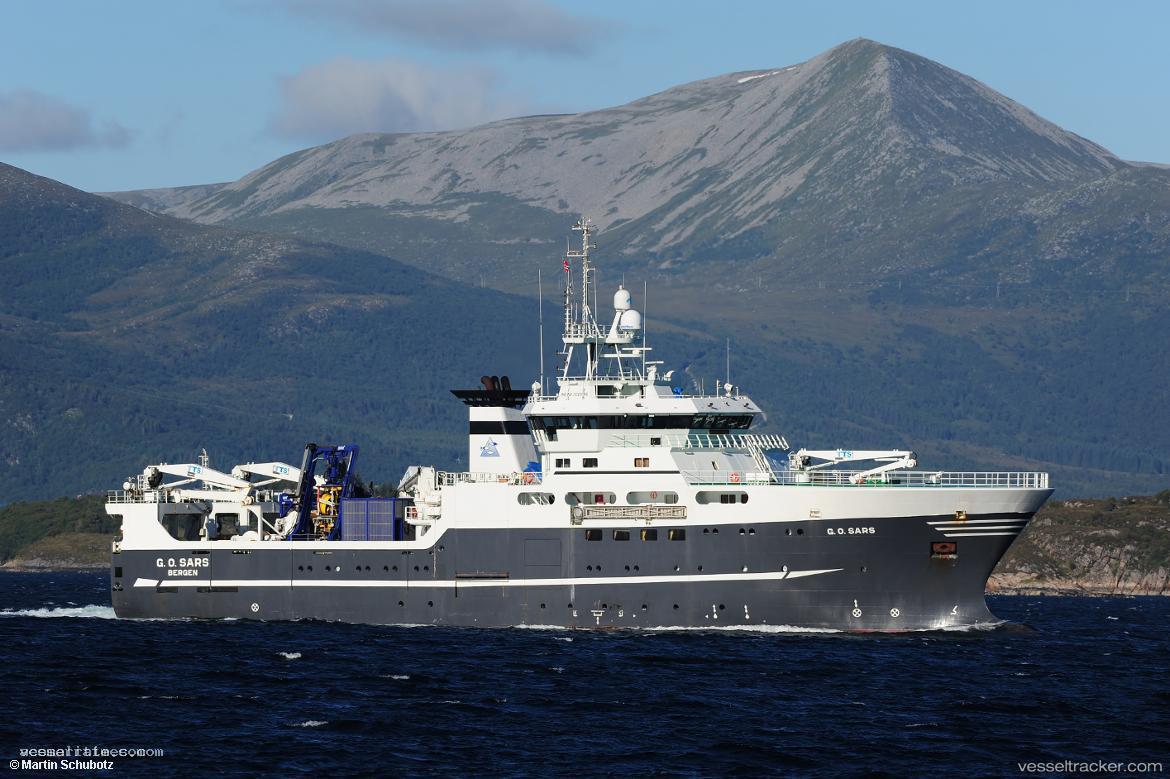
Vessel Details
MMSI
257105000
Callsign
LMEL
Width
18.0 m
Length
78.0 m
Reviews (1)
Eugene
2024-10-31
Position: Storekeeper
Advantages:
Looking for information about this vessel. Has anyone worked on this boat? Any red flags?
Disadvantages:
No personal experience yet, just gathering info.
Latest News (2)
New Insights Into the Komsomolets Wreck: Comprehensive Survey Reveals Nuclear Safety Status
On March 23, 2026, the Norwegian Radiation and Nuclear Safety Authority based in Tromsø unveiled a critical report concerning the sunken Russian submarine 'Komsomolets'. This nuclear-powered vessel tragically sank on April 7, 1989, while navigating the European Arctic Ocean, approximately between Norway and Svalbard. A catastrophic fire erupted in the stern of the submarine at a depth of around 400 meters. Despite efforts to pump air into the ballast tanks to facilitate surfacing, a failure in the port ballast tank caused a rapid spread of flames, ultimately leading to a leak. Though the 'Komsomolets' managed to surface, it succumbed to the fire and sank, resulting in the loss of 42 lives while 27 crew members survived. Resting now at a depth of nearly 1,700 meters, the 'Komsomolets' has been a subject of investigation by the Soviet Union and subsequently Russia to mitigate any risks of radioactive release. In 1994, urgent measures were taken to seal the submarine’s torpedo tubes and other openings with titanium plates to prevent contamination of the surrounding waters. Norway has taken a proactive stance on monitoring the wreck since 2013, with notable studies conducted in 2019 wherein researchers utilized remotely operated vehicles (ROVs) to assess the state of the submarine. The recent findings indicate that the titanium seals remain intact, with no plutonium detected near the damaged forward section of the vessel. However, the reactor has shown signs of releases. Maximum activity levels of 90Sr and 137Cs were found to be alarmingly high, at concentrations 400,000 and 800,000 times above typical levels in the Norwegian Sea. Additionally, elevated quantities of isotopes like 239Pu, 240Pu, and 236U were detected, revealing corrosion within the reactor's nuclear fuel, raising concerns about future releases. The report provides an in-depth analysis of the extent of damage to the 'Komsomolets' while reassuring that no significant radioactive accumulation has occurred in the nearby environment, likely due to the rapid dilution of released radionuclides in surrounding seawater. Nonetheless, ongoing monitoring and further investigations are essential to comprehend the mechanisms of these releases and the long-term implications of the wreckage. The research was bolstered by the collaboration of various scientific institutions, with funding from the Institute of Marine Research, the Norwegian Radiation and Nuclear Safety Authority, and the Norwegian Ministry of Foreign Affairs. Conducted aboard the research vessel 'G.O. Sars' and employing the ROV 'Ægir 6000', the study also involved significant contributions from A/Prof. S.G. Tims, Prof. L.K. Fifield, and Drs. M.B. Froehlich, and S. Pavetich, who conducted Accelerator Mass Spectrometry measurements at the Australian National University. For an in-depth look at the findings, please refer to the full report available here: https://www.pnas.org/doi/abs/10.1073/pnas.2520144123.
Discovery of Lost British Submarine HMS 'Thistle' in North Sea
The long-lost British submarine HMS 'Thistle' has recently been located in the North Sea off the southwestern coast of Norway, after remaining unaccounted for for 83 years. This historic vessel was sunk by a German U-boat during World War II, disappearing into the depths on April 9, 1940. The discovery was made during a spring 2023 survey conducted by the research vessel 'G.O. Sars', which was mapping seabed geology and biology. At a depth of 160 meters, an anomaly was detected, and with the help of ROV-mounted cameras, the team revealed what appeared to be a sunken submarine. However, it wasn't until a follow-up ROV dive in October 2023 that the imagery allowed the Royal Navy to confirm the vessel's identity. This expedition was part of the ongoing MAREANO project, which has been in operation since 2006, involving Norway’s Institute of Marine Research (IMR), the Geological Survey of Norway, and the Norwegian Mapping Authority. During the spring mission, researchers came across four other shipwrecks, with only one, the cargo ship 'Azalea', having been previously documented. Initial assessments suggested the wreck could belong to another British submarine, HMS 'Oxley', which also sank shortly before WWII. However, the HMS 'Thistle' (N24), a T-class submarine launched in October 1938, increasingly emerged as the more plausible identity. In the end, detailed imaging captured during the October voyage by the ROV ÆGIR 6000 to the Skagerrak provided the clarity needed for identification, although the final responsibility for confirming the wreck lies with the Royal Navy. For more insights and images of this significant find, visit the report here: https://divernet.com/scuba-news/wrecks/british-ww2-sub-wreck-located-off-norway/
Frequently Asked Questions
🔥 Were there any fires on G.o.sars?
Based on available news reports, G.o.sars has been mentioned in connection with fire-related incidents. There have been 1 news reports mentioning fire incidents. For detailed information about specific incidents, please refer to the latest news section above.
🌊 Did G.o.sars sink or have any sinking incidents?
Based on available news reports, G.o.sars has been mentioned in connection with sinking-related incidents. There have been 2 news reports mentioning sinking incidents. For detailed information about specific incidents, please refer to the latest news section above.
🛠️ Did G.o.sars experience any breakdowns or mechanical failures?
Based on available news reports, G.o.sars has been mentioned in connection with breakdown-related incidents. There have been 1 news reports mentioning breakdowns. For detailed information about specific incidents, please refer to the latest news section above.
🛢️ Did G.o.sars have any oil spills or pollution incidents?
Based on available news reports, G.o.sars has been mentioned in connection with spill-related incidents. There have been 1 news reports mentioning spills. For detailed information about specific incidents, please refer to the latest news section above.
Add a Crew Review
Similar Vessels You Might Be Interested In