Msc-Baltic-Iii Ship Details and Seafarer Feedback
IMO: 9241475
Container Ship, Liberia
Photos
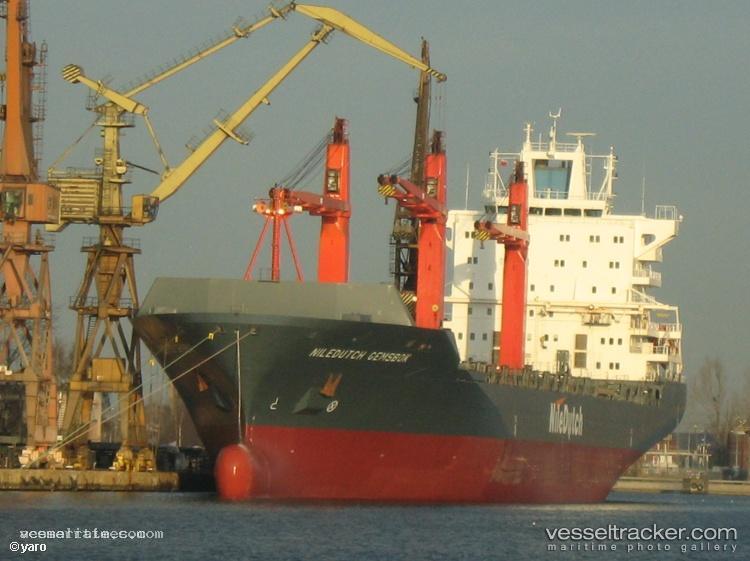
Vessel Details
MMSI
636021252
Callsign
5LDA4
Width
30.0 m
Length
207.0 m
Reviews (1)
Russell
2024-10-05
Position: Medical Officer
Advantages:
Looking for information about this vessel. Can someone share their experience on this boat? Was the pay decent?
Disadvantages:
No personal experience yet, just gathering info.
Featured Review Articles
Salvage Operations Progress on Msc-Baltic-Iii: Environmental Threats Mitigated as Fuel and Cargo Extraction Continues
Recent salvage operations on the Msc-Baltic-Iii, which has been grounded near Wild Cove, Newfoundland since February 15, 2023, have marked significant milestones in addressing the environmental and logistical challenges posed by the stricken vessel....
Read Full ReviewLatest News (8)
Cableway Construction Enhances Access to the MSC Baltic III Amid Winterization Efforts
As the summer days wane, the salvage teams focused on the grounded MSC Baltic III are gearing up for winter preparations. Since the vessel ran aground, meticulous assessments have been conducted to evaluate its condition and eliminate potential pollutants on board. Earlier this summer, the majority of heavy fuel oil from the ship’s six main tanks was successfully extracted. By September 4th, further efforts allowed for the removal of most residual heavy fuel oil that remained despite initial heating and pumping attempts. Salvage contractors now deem four of the six primary tanks thoroughly flushed of residual oil, although additional work may still be required. The cleaning method for these primary tanks involves using diesel fuel or marine gas oil from smaller tanks on the MSC Baltic III, effectively diluting the remaining heavy fuel oil. All smaller tanks have been cleaned and inspected, meeting federal standards. In anticipation of colder weather, crews are constructing a cableway to facilitate access to the ship from the Cedar Cove shoreline. This innovative system will function similarly to a zipline, enabling a caged box to transport personnel to and from the vessel. Currently, crews board the MSC Baltic III using a stairway from the starboard side or via a walk-to-work platform on the assist vessel, Eems Dublin. A stone platform has been established atop the hill at Cedar Cove, marking the departure point for the cableway to the ship’s deck. While the cableway's operation will depend on weather conditions, it promises to offer a more reliable access route than the existing methods, which are susceptible to variable sea states. As winter approaches, daily access to the ship may diminish by over 50% due to deteriorating weather. The Eems Dublin will remain in the vicinity to assist with the transfer of personnel and containers, available as conditions allow until all container removal operations are completed and the cableway is fully operational. The Canadian Coast Guard continues to prioritize the management of potential pollutants aboard the MSC Baltic III. Meanwhile, salvage efforts have shifted temporarily to focus on the ship’s cargo, which consisted of 472 containers, approximately half of which were empty. As of September 4th, 399 containers have been removed, leaving 73 still onboard, submerged and inaccessible due to water in the holds. This cargo includes food items and sensitive materials such as newsprint, many of which are now soggy and likely too heavy to be lifted by the ship's cranes. The decaying food has emitted gases that pose challenges for crew members, with monitoring in place to assess whether protective equipment and breathing apparatus are necessary. The Canadian Coast Guard has requested that the public refrain from approaching the Cedar Cove area during ongoing salvage operations, although the site has attracted sightseers. The possibility of refloating the MSC Baltic III remains uncertain, with ongoing dive surveys monitoring the underwater condition of the double-hulled ship and informing winterization strategies. Upcoming dive operations have been scheduled, likely post-storm, as the state of the inner hull remains under scrutiny and could be critical in determining the vessel's refloating potential. While no tar balls have been detected since July, beach surveys continue to reveal and remediate small tar stains in Cedar Cove and adjacent shorelines. For more detailed updates and visuals, visit: https://www.saltwire.com/newfoundland-labrador/cableway-to-msc-baltic-iii.
Successful Salvage Operation of MSC Baltic III: 333 Containers and Most Fuel Removed
The Canadian Coast Guard has achieved a significant milestone in the ongoing salvage operation of the 'MSC Baltic III'. As of August 19, 2023, the team has successfully removed the majority of oil from the vessel's internal tanks and has offloaded 333 containers, representing nearly 75% of the total cargo. This operation is crucial as fuel remains the vessel's primary concern. Grounding and adverse weather have led to cracks in the hull, resulting in minor oil leakage, with small tar balls reported along nearby shorelines. Initially, the vessel carried 1,600 metric tons of heavy fuel oil and Marine Gas Oil, with approximately 475 containers onboard, over half of which were empty. Currently, 142 containers still remain on the ship. With the fuel tanks now mostly emptied, the focus has shifted towards addressing the remaining 10% of residual oil, which poses an environmental risk if it leaks. As of now, there are no announced plans for the future of the hulled vessel.
Successful Removal of Heavy Fuel Oil from MSC Baltic III Marks Key Milestone
As of July 16, T&T Salvage teams have accomplished the significant task of transferring all bulk heavy fuel oil from the MSC Baltic III's internal tanks to the ship's deck. Over the course of their operation, salvors have meticulously pumped out approximately 1,300 cubic meters of heavy oil daily. To facilitate the final removal, the last remnants of fuel required heating to a temperature between 60 and 70 degrees Celsius for three continuous days. While this achievement signals a major progressive step in the salvage operation, officials emphasize that substantial work still lies ahead. The heavy fuel oil accounted for nearly 70% of the total fuel onboard, but 70 tons of hydraulic oil, lube oil, and boiler fuel remain to be extracted. Additionally, out of the 472 containers present on the vessel, 255 have been successfully removed, leaving 217 still aboard. The salvage operation has encountered hurdles with certain containers, particularly a shipment of lentils that has absorbed water, significantly increasing their weight and complicating crane operations. The entire process is under close scrutiny from multiple agencies, and efforts will now concentrate on the extraction of remaining oils as well as addressing the challenges posed by the waterlogged containers. For detailed reports, photos, and videos, check out [VOCM](https://vocm.com/2025/07/17/274607/) and [SaltWire](https://www.saltwire.com/newfoundland-labrador/nl-shipwreck-salvage-reaches-pollution-mitigation-milestone).
Successful Fuel Removal Operation from MSC Baltic III
In a significant environmental effort, over 1,000 tons of heavy fuel oil were successfully extracted from the grounded container ship 'MSC Baltic III'. The operation took place under favorable summer weather conditions, allowing crews to transfer the fuel to a barge adjacent to the vessel before it was safely transported to the Port of Corner Brook for proper disposal. When 'MSC Baltic III' ran aground, it carried an estimated 1,600 tons of fuel oil, and this extensive removal has notably mitigated environmental risks to Newfoundland's stunning coastline. While six priority fuel tanks were mostly emptied, there remains a smaller tank in the engine room, which may still contain heavy fuel oil. Additionally, various other tanks are loaded with different types of hydrocarbons like diesel and hydraulic fluids, albeit in smaller amounts, which will require less extensive heating prior to removal. The extraction process is meticulous, necessitating a heating range of 70°C to 80°C for the oil to become pumpable, complicating operations due to limited safe access to the vessel. As of July 10, a total of 208 out of 472 containers on board had been removed, some of which were obstructing access to the fuel tanks and were in severely damaged states. Efforts to minimize pollution risks are ongoing, but 'MSC Baltic III' remains firmly stuck on the rocks, its hull suffering from extensive damage. A refloating attempt is currently deemed unfeasible due to the vessel's condition. Salvage teams are hoping for continued favorable weather to finalize the lightering process before the onset of hurricane season heightens risks. Meanwhile, environmental monitoring continues in local waters and along the shoreline, with reports of minor oil pollution, such as tar balls and stains, particularly around Cedar Cove and neighbouring coastal regions. Authorities have issued reminders about an emergency drone restriction zone that extends one nautical mile around the vessel, critical for ensuring the safety of salvage operations and the public. For more detailed updates and photographs, visit the following links: [CBC News](https://www.cbc.ca/news/canada/newfoundland-labrador/baltic-july-3-update-1.7575988), [Radio Canada](https://ici.radio-canada.ca/nouvelle/2179275/msc-baltic-3-echoue-carburant-pompage-terre-neuve), [Safety4Sea](https://safety4sea.com/authorities-continue-salvage-of-container-ship-five-months-later/), [SaltWire](https://www.saltwire.com/newfoundland-labrador/grounded-nl-cargo-ship-salvage-nears-milestone).
Significant Progress in Fuel Removal from MSC Baltic III After Grounding Incident
As of July 10, a remarkable 85% of the heavy fuel aboard the MSC Baltic III has been successfully transferred to other ships following a grounding incident near Wild Cove, Newfoundland on February 15. The vessel, originally holding around 1,700 tons of heavy fuel and marine gas oil, has made considerable progress in hazardous material removal operations. Crews are diligently working to extract the remaining fuel from both the engine room and smaller auxiliary tanks. To date, 208 out of the 472 containers onboard have been offloaded, minimizing the vessel's environmental impact. Although minor traces of oil persist on nearby shorelines, a one-nautical-mile safety zone continues to be enforced around the MSC Baltic III to ensure maritime safety during the ongoing recovery efforts.
Ongoing Cleanup Efforts on MSC Baltic III as Winter Approaches
The dedicated cleanup operation on the 'MSC Baltic III' has made steady progress over recent weeks, as crew and insurance representatives work diligently on-site. Although an official completion timeline remains elusive, there are hopes to extract the remaining fuel from the vessel before winter sets in. However, it appears that the ship will likely remain in its current position throughout the winter months. Onboard, there were six priority tanks filled with heavy fuel that have nearly been emptied, but additional hydrocarbons still require removal. This challenging task demands the oil to be heated to temperatures between 70°C and 80°C for effective pumping—a complicated process given the limited safe access windows available. The presence of the 'EEMS Dublin' has been beneficial in facilitating these operations, especially with its attached walkway. Meanwhile, recent reports of tar balls washing ashore near the grounded vessel prompted a swift response from a specialized organization along with Environment Canada, who have intensified their shoreline assessments. As cleanup efforts continue, stakeholders remain focused on safeguarding the surrounding environment.
Significant Progress Made in Fuel Removal from MSC Baltic III
The environmental threat posed by the 'MSC Baltic III' has notably diminished, with over 70% of the onboard fuel oil successfully extracted. The ship had earlier been challenging to access due to severe winter conditions; however, as the snow has melted and storms have subsided, safe passage both by sea and land has been established. Out of the 473 containers that were onboard, 283 were empty, while others contained potentially hazardous cargo. The 'Eems Dublin' vessel has played a crucial role in this operation, successfully retrieving 43 containers from the vessel. In total, 172 containers have been removed from the 'MSC Baltic III.' Currently, four frac tanks have been positioned on the ship's deck. The process involves heating and pumping the oil into these tanks, which will then be promptly removed. Notably, four out of the six main tanks have already been emptied. Despite the progress, oil booms have been deployed around the vessel as precautionary measures against small oil sightings, including tar spots and small tar balls, reported in Cedar Cove and along the adjacent coastline.
Significant Advances in Salvage Operation for MSC Baltic III
The ongoing salvage operation for the stranded MSC Baltic III is witnessing notable progress as dedicated teams continue their diligent efforts at the site. Thankfully, the weather conditions, which posed challenges earlier this winter and spring, have significantly improved, facilitating easier access to the vessel for the crews on the ground. A local mayor has announced that a new light vehicle road is set to be completed this week, enhancing accessibility for personnel to this remote location on the western shore of Newfoundland. It is important to note, however, that this road is not intended for the transportation of materials from the ship. In a bid to ensure safety and efficiency, progress has been made with the removal of containers from the vessel, granting salvage teams access to critical areas, including the fuel tanks that were previously unreachable. To date, approximately half of the heavy fuel onboard has been successfully extracted through a process of heating and pumping it into storage tanks positioned on the vessel's deck. This extracted fuel is then transferred onto a barge and transported to Corner Brook, where it is being loaded onto other MSC vessels for further processing. According to the Coast Guard, the MSC Baltic III originally contained around 1,600 metric tons of heavy fuel and marine gas oil. The salvage operation has also been bolstered by the presence of the Eems Dublin, an open hatch vessel which offers a walk-to-work platform for personnel working on the MSC Baltic III. Furthermore, a crane vehicle has been deployed aboard Eems Dublin to assist in hoisting containers from MSC Baltic III to its deck. As of June 13, salvage teams have successfully removed over half of the fuel from the ship's main fuel tanks, along with 14 additional containers, six of which contained expired food products. The operation is ongoing, with crews committed to resolving the challenges posed by this complex salvage mission. Stay tuned for further updates as the situation evolves.
Frequently Asked Questions
🌊 Did Msc-Baltic-Iii sink or have any sinking incidents?
Based on available news reports, Msc-Baltic-Iii has been mentioned in connection with sinking-related incidents. There have been 3 news reports mentioning sinking incidents. For detailed information about specific incidents, please refer to the latest news section above.
⚙️ Did Msc-Baltic-Iii have any engine problems?
Based on available news reports, Msc-Baltic-Iii has been mentioned in connection with engine-related incidents. There have been 2 news reports mentioning engine problems. For detailed information about specific incidents, please refer to the latest news section above.
🛢️ Did Msc-Baltic-Iii have any oil spills or pollution incidents?
Based on available news reports, Msc-Baltic-Iii has been mentioned in connection with spill-related incidents. There have been 8 news reports mentioning spills. For detailed information about specific incidents, please refer to the latest news section above.
🚓 Was Msc-Baltic-Iii detained or arrested?
Based on available news reports, Msc-Baltic-Iii has been mentioned in connection with detention-related incidents. There have been 3 news reports mentioning detentions. For detailed information about specific incidents, please refer to the latest news section above.
Tell Us About This Ship
Similar Vessels You Might Be Interested In