Discover the Sparta-Iv: Ratings & Maritime News
IMO: 9743033
Deck Cargo Ship, Russia
Photos
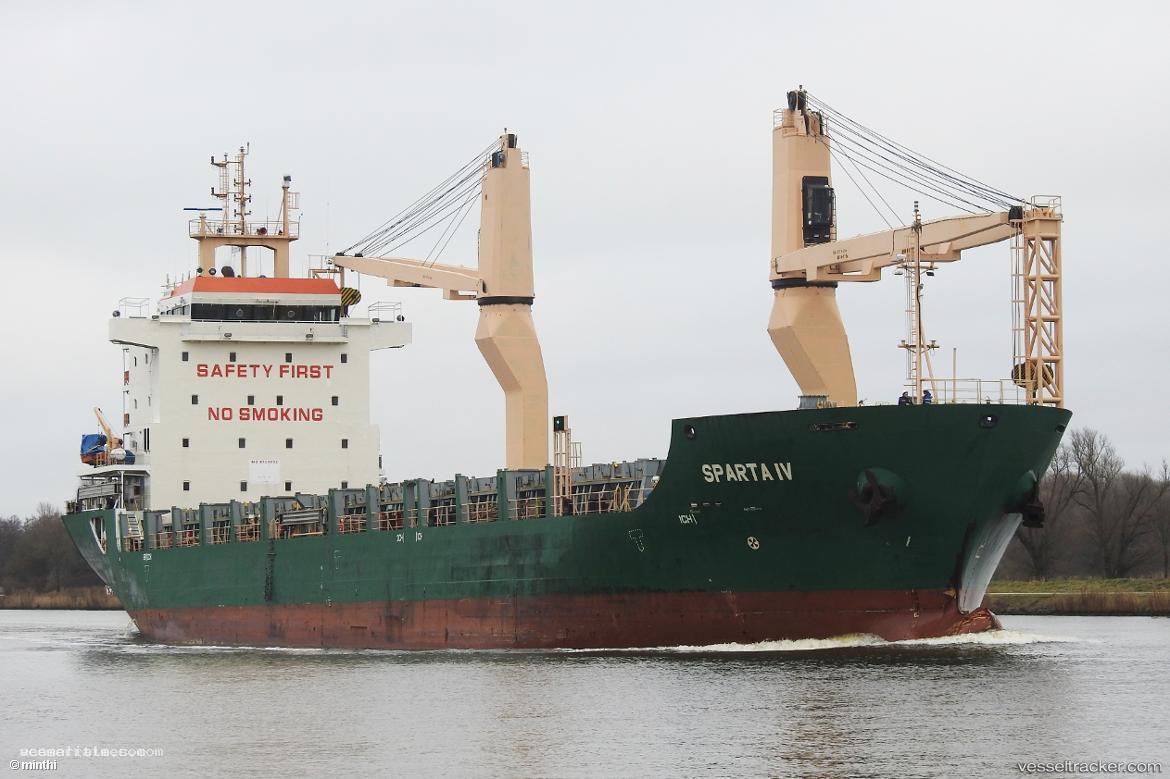
Vessel Details
MMSI
273413440
Callsign
UIYM
Width
20.0 m
Length
122.0 m
Reviews (1)
Kyle
2025-03-19
Position: Able Seaman
Advantages:
Looking for information about this vessel. Any reviews on this vessel? Was the crew alright?
Disadvantages:
No personal experience yet, just gathering info.
Featured Review Articles
Navigating Tensions: The Strategic Movements of Sparta-Iv
The recent operational movements of the Sparta-Iv, a sanctioned Russian vessel, underscore both the geopolitical dynamics of maritime operations and the critical surveillance activities that characterize the current state of affairs in European water...
Read Full ReviewSparta-Iv: A Strategic Maritime Enigma in Troubled Waters
The ongoing movements of the Sparta-Iv have raised significant eyebrows within maritime surveillance circles, especially following its recent participation in a Russian naval convoy ostensibly heading towards Port Said, Egypt. As of January 9, the ca...
Read Full ReviewThe Strategic Maneuvers of Sparta-Iv: Military Logistics or Provocation?
On September 20, the cargo vessel Sparta-Iv, known for its role in military logistics, was spotted navigating the North Sea towards the English Channel. Accompanied by the Soviet-era frigate RFN 'Neustrashimy', this vessel raised alarms in the naval...
Read Full ReviewLatest News (13)
Suspicious Movements of Sanctioned Russian Vessel Above ACE Cable Sparks Concerns
On February 18, 2023, the 'Sparta IV', a vessel affiliated with Russia's notorious shadow fleet, lingered over the Africa Coast–Europe (ACE) submarine communications cable, drawing attention while being accompanied by ships from the Russian Navy. Although the ship operated in international waters, it consciously sidestepped entering Portugal’s exclusive economic zone, maintaining a cautious distance of roughly 35 nautical miles from the nation’s maritime limits. Official sources suggested that the vessel's prolonged stay was due to inclement weather; however, commercial vessels operating in the vicinity reported no significant interruptions. The strategic positioning of 'Sparta IV' directly above the vital undersea cable, combined with its naval escort, has led to increased speculation that the ship may have been engaged in seabed mapping or surveillance tasks, potentially testing NATO, EU, and Portuguese monitoring and response protocols by navigating close to the EEZ boundary. Earlier, on February 12, the 'Sparta IV' was spotted in the eastern English Channel, near Dover, as it approached the Dover Strait convergence zone. Its navigational movements have been under close scrutiny. Owned by Russian SK-Yug LLC, a firm that is currently under sanctions, the 'Sparta IV' is a subsidiary of Oboronlogistika LLC, another sanctioned organization. Oboronlogistika plays a crucial role in Russia’s military logistics framework, acting as the sole transportation contractor for the Russian defense ministry, which includes troop movements and cargo transport to temporarily occupied regions, such as Crimea. Notably, the 'Sparta IV' is also under US sanctions, highlighting its contentious role in international maritime activities.
Portuguese Air Force Trails Sanctioned Vessel Sparta IV Heading Towards Kaliningrad
On February 16, the Portuguese Air Force deployed a Lockheed P-3C Orion aircraft and a Tekever AR5 drone to monitor the 'Sparta IV', a vessel under sanctions and associated with military transport activities. The 'Sparta IV' was observed navigating northward, presumably to avoid the severe weather anticipated in the Bay of Biscay on February 18. Continuous surveillance was maintained as the ship traversed NATO's area of interest. Previously, on February 15, the 'Sparta IV' departed from the Mediterranean, heading towards the Atlantic alongside the RFS 'Aleksandr Otrakovsky', a Ropucha-class landing ship from the Northern Fleet. This journey was closely observed by the Royal Navy's HMS 'Cutlass', which set sail from Gibraltar's naval base, as well as by a French Navy maritime patrol aircraft, the Atlantique ATL.2. While the patrol vessel stayed near the convoy throughout the transit, the French aircraft provided aerial reconnaissance south of the Strait of Gibraltar, showcasing a well-coordinated operation among NATO allies. Significantly, this voyage marked a departure from previous transits for the 'Sparta IV', which typically operated alongside the destroyer 'Severomorsk' and the tanker 'Kama'. Reports suggest these accompanying ships have shifted back towards the eastern Mediterranean, hinting at a potential reduction in Russian naval presence in the western region. The escorting of the commercial cargo ship by the RFS 'Aleksandr Otrakovsky' underscores Moscow's ongoing strategy of utilizing civil maritime vessels for military purposes. For NATO, tracking the movements of the 'Sparta IV' is a critical aspect of monitoring the stability of Russian supply chains amidst the ongoing conflict in Ukraine. This heightened observance echoes recent trends in increased Russian naval operations in the Mediterranean. The strategic implications of the 'Sparta IV's' departure signal possible adjustments in Russia's maritime posture in the region.
Russian Naval Convoy Resumes Journey After Weather Delay
A Russian naval convoy, featuring the cargo ship 'Sparta IV', the Navy tanker 'Kama', and the destroyer RFS 'Severomorsk', has resumed its journey after being stationary east of Sardinia for five days due to adverse sea conditions. Taking advantage of a temporary weather improvement, the convoy departed the Tyrrhenian Sea on February 10, making its way toward Gibraltar. The Italian Navy frigate ITS 'Spartaco Schergat (F598)' had been tracking the Russian naval formation, registering a single plot earlier in the day. With the convoy steadily proceeding northward at approximately 10 knots, it was anticipated that it would continue on its westward course and eventually return to Russia. The Italian Navy concluded its surveillance mission on February 11, following the Russian vessels' departure. The frigates ITS 'Spartaco Schergat (F598)' and ITS 'Emilio Bianchi (F589)' subsequently resumed their regular operational duties. As the Russian convoy navigates through changing marine weather conditions, questions arise regarding whether it will make a direct route to Gibraltar or seek refuge along the Algerian coast. Notably, the 'Sparta IV' has indicated Kaliningrad as its destination, with an estimated time of arrival set for February 17.
Mysterious Movements of Russian Ship 'Sparta IV' Near Sardinia
On February 4, 2023, the Russian vessel 'Sparta IV' was reported loitering east of Sardinia under puzzling circumstances, having suddenly changed its course and moved northward. Initially, the ship was believed to be heading towards Gibraltar, and later it was speculated to be en route back to Russia. For approximately six hours, 'Sparta IV' was observed traversing the same maritime region at a consistent speed of around 11 knots. Although direct confirmation linking 'Sparta IV' with the Russian Navy destroyer 'Severomorsk' and the tanker 'Kama' was not established, the likelihood of a connection between the three vessels appeared significant, further complicating an already enigmatic situation. In response, NATO assets based in Sigonella maintained a heightened state of alert. On February 5, the Italian Air Force's P-72A (MM62311) undertook active surveillance of the Russian convoy within the Tyrrhenian Sea. For further details and photographs, visit the original report at: https://www.unionesarda.it/en/sardinia/the-russian-ship39-s-strange-route-off-the-coast-of-sardinia-nato-monitors-its-movements-uarw2dh7.
Russian Naval Flotilla Navigates Near Italy's Shores
On February 3, 2023, a notable Russian Navy flotilla was detected transiting the Sicily Channel, maneuvering closely along the southeastern coast of Sicily. This convoy included the destroyer RFS 'Severomorsk', the tanker 'Kama', and the support vessel 'Sparta IV'. The ships executed a brief foray into the Ionian Sea before changing course back westward through the Sicily Channel. This navigation highlighted the central Mediterranean's ongoing status as a crucial route for Russian naval operations amidst increasing regional scrutiny. The operation, carried out in compliance with international maritime regulations, inevitably attracted attention due to its proximity to Italian territorial waters. Both surface and allied maritime awareness systems monitored the flotilla’s movements, with additional surveillance provided by an Italian Air Force ATR P-72A maritime patrol aircraft conducting a routine mission in the area. In an interesting routing choice, the 'Sparta IV' did not follow the most direct route towards Gibraltar, opting instead for a detour through the Ionian Sea. This event signals the enduring significance of naval activity in the central Mediterranean region.
Sanctioned Russian Vessel Delivers Military Cargo to Libya, Heads Towards Tartus
The Russian vessel 'Mys Zhelaniya' was recently in the spotlight after it successfully delivered military supplies to Libya, docking at the port of Tobruk on January 16, 2023. The ship's journey originated from Baltiysk, a prominent Russian port, and was notably escorted by a Project 1155 Udaloy-class anti-submarine warfare vessel, underscoring the significance of the cargo aimed at bolstering Russia's military presence in the region, particularly the controversial 'African Corps'. Despite efforts to obscure its destination in navigation systems, both the vessel's route and extensive intelligence surveillance confirmed the offloading of valuable military equipment in Tobruk. Meanwhile, another sanctioned ship, the 'Sparta IV', was observed making its way toward Syria's Tartus port, raising additional concerns over similar military endeavors. Although both vessels declared Tartus as their destination, their paths diverged as their voyages progressed. Owned by companies linked to Russia's military and energy strategies, both vessels exemplify the ongoing sanctions imposed on Russian entities. 'Sparta IV' is affiliated with SK-Yug, a subsidiary of the sanctioned Oboronlogistika, which has a long-standing role in providing support to the Ministry of Defense of Russia. On the other hand, 'Mys Zhelaniya' belongs to Transstroy, a major construction firm also under sanctions, heavily involved in large-scale energy projects throughout Russia’s Arctic and north. For a more detailed report and accompanying photos, visit the source: https://militarnyi.com/en/news/sanctioned-russian-ship-mys-zhelaniya-brings-military-cargo-to-libya/
Russian Naval Convoy Navigates Near Portugal
On January 9, 2023, a Russian naval convoy featuring the cargo ships 'MYS Zhelaniya' and 'Sparta IV' was spotted cruising south of the Portuguese coastline. This operation is officially aimed at the port of Said in Egypt, with the escort of the destroyer 'Severomorsk'. While 'Sparta IV' typically indicates an Egyptian destination, its route frequently directs it toward the Syrian port city of Tartus, home to a key Russian military facility. For further details and visuals, you can view the report here: https://militarnyi.com/en/news/two-cargo-ships-escorted-by-russian-destroyer-severomorsk-were-spotted-off-the-coast-of-portugal/
Russian Naval Convoy Heads to Port Said with Heavy Escort
In a significant maritime development, a Russian convoy has recently been spotted making its way into the Mediterranean Sea after navigating through the English Channel from Kaliningrad. The convoy comprises the Russian-flagged cargo ships 'MYS Zhelaniya' (IMO: 9366110) and 'Sparta IV,' under the watchful protection of the destroyer RFS 'Severomorsk' (pennant number 619). This strategic decision to provide full escort into the Mediterranean rather than just through the English Channel reflects Moscow's heightened significance placed on this maritime journey. The RFS 'Severomorsk' stands as the most notable Russian surface combat vessel in the Mediterranean at present, and its assignment to protect the convoy is quite unusual. Both of the cargo vessels are heading toward Port Said, projected to arrive by January 19, 2026. However, Port Said often serves as a preliminary destination for vessels planning to transit the Suez Canal or engage in activities elsewhere in the Eastern Mediterranean, with possible changes to their final destinations occurring on short notice. Currently, it remains ambiguous whether this convoy will continue towards Egypt, the Levant, or another port within the Mediterranean. An intriguing aspect of this operation is the presence of the 'Severomorsk.' In previous instances involving similar Russian logistics missions—especially those incorporating Sparta-class vessels—escorted by advanced naval combatants was not commonplace. The deployment of the 'Severomorsk' suggests a more calculated and militarized strategy, likely influenced by escalating tensions, increasing maritime surveillance, and the growing significance of supply routes linking the Atlantic with the Mediterranean and beyond. The involvement of the 'Severomorsk' is not merely ceremonial. Assigning such a formidable asset to guard these logistics signifies Russia's commitment to safeguarding vital supply channels, even at the potential cost of limiting its naval capacity. This tactic could reflect a broader strategy in response to evolving maritime dynamics. For further insights and visuals on this convoy operation, visit: https://united24media.com/latest-news/russian-warship-escorts-sanctioned-ship-near-nato-days-after-us-seized-a-similar-one-14898.
Russian Landing Craft 'Alexandr Shabalin' Spotted Near Fehmarn Island Escorting Russian Shadow Fleet Vessel
In a notable maritime development, the Russian landing ship 'Alexandr Shabalin' has been frequently sighted off the coast of Fehmarn Island in recent weeks. Anchored in international waters adjacent to a bustling shipping lane, the vessel's presence raises eyebrows among security experts. Analysts speculate that the 'Alexandr Shabalin' serves dual purposes: prominently displaying Russia's naval capabilities while potentially escorting vessels linked to its shadow fleet. Confirming these activities, webcam footage from the Danish island of Sprogø in the Great Belt showcased the 'Alexandr Shabalin' escorting the cargo ship 'Sparta IV,' which set sail from a Syrian port bound for the Russian enclave of Kaliningrad. Once in the Kattegat region, the Russian landing craft provided proximity and support to the 'Sparta IV' as it transited through Danish and German waters. International analysts have raised concerns that the 'Sparta IV' may be transporting advanced weaponry or military gear from Syria, which could be valuable for Russia amid its ongoing conflict in Ukraine. This isn't the first instance of such logistics; the 'Alexandr Shabalin' has previously facilitated similar shipments. Additionally, during the spring of 2024, the Russian Navy was noted to have conducted escort operations for comparable maritime journeys. The Federal Police are closely monitoring the activities surrounding the 'Alexandr Shabalin.' However, the vessel remains compliant with international shipping laws. As a part of the Ropucha class and serving within the Baltic Fleet, the 'Alexandr Shabalin' has an operational history dating back to its launch in 1985 in Gdansk. The ship boasts a carrying capacity of around 340 troops and can transport up to ten tanks, armed with a range of weaponry, including cannons, rocket launchers, and anti-aircraft systems. Its large bow door allows for the direct deployment of troops, vehicles, and heavy equipment onto shore. For further details and visuals related to the 'Alexandr Shabalin', you can visit the report at Yacht.de.
Royal Navy Tracks Russian Military Transporter 'Sparta IV' Through North Sea
On September 20, 2023, the Royal Navy closely monitored the passage of the cargo vessel 'Sparta IV', known for its military cargo capabilities, as it navigated westward across the North Sea en route to the English Channel. The ship was under the escort of the vintage Soviet frigate RFN 'Neustrashimy', highlighting ongoing attention to maritime movements by Russian forces. Operating since 2018 under a shipping company facing sanctions, the 'Sparta IV' has raised concerns among military observers. In response to these developments, the Royal Navy deployed the HMS 'Iron Duke', based in Plymouth, to oversee the transit, marking the 18th time in a year the frigate has been activated for such monitoring missions. To date, HMS 'Iron Duke' has tracked 25 Russian vessels. For this operation, a Wildcat helicopter from Yeovilton's 815 Naval Air Squadron provided additional aerial support. Thankfully, the vessels passed without incident as 'Sparta IV' continued on its course toward the Mediterranean Sea. As they approached the Channel Islands and the island of Ushant, command of the monitoring operation was transferred from 'Iron Duke' to a NATO ally. After concluding its escort duties, the Russian frigate reversed course, opting to return through the English Channel. The HMS 'Iron Duke' maintained its watch over 'Sparta IV' until the cargo vessel was securely back in the North Sea, finalizing operations on September 23 and returning to its homeport. The uptick in monitoring comes in the wake of multiple reports indicating potential drone activities being conducted from Russian-controlled vessels. Notably, air traffic at Copenhagen's airport was suspended on September 22 due to suspected drone launches from a nearby cargo ship. Additionally, Germany has been tracking similar drone incidents, including those involving the detained vessel 'Scanlark', which remains in Kiel port as of September 26.
Russian Naval Convoy Monitored by NATO Ships During Passage through European Waters
On March 19, 2025, a Russian naval convoy comprising four vessels approached Skagen Reef, en route to the Great Belt. This operation has been under close surveillance by the Royal Navy and its NATO allies since the task group entered the English Channel on March 16. Participating in the observational mission were the Type 23 frigate HMS 'Somerset', the minehunter HMS 'Cattistock', and the support ship RFA 'Tidesurge', all collaborating from their position south of Portsmouth. The operation also integrated aerial support, featuring a RAF P8 Poseidon maritime patrol aircraft dispatched from RAF Lossiemouth. The naval group was reportedly returning from Syria, where it had retrieved surplus military equipment following the collapse of the Russian-supported Assad regime in December 2024. Throughout their passage, the vessels have been continually shadowed by NATO naval assets and air support, with the Danish Navy taking over this surveillance once the Russian squadron rounded Skagen. The convoy itself included the destroyer 'Severomorsk', the landing craft 'Aleksandr Shabalin', and two cargo vessels, the 'Sparta IV' and 'Siyanie Severa', both under the Russian Navy's command. Targeting St. Petersburg, the fleet is expected to arrive by March 24, where they plan to offload Syrian equipment. Furthermore, Russia is currently in discussions with the new Syrian leadership to secure ongoing access to the strategically vital naval base in Tartus, and there are indications that they may offer Russian oil as payment. The current status of these negotiations remains unconfirmed. For further details and photographs, visit the Royal Navy's official site.
Russian Military Equipment Transport from Syria to Port Said Amidst Ongoing Conflict
The cargo vessel 'Sparta IV' is currently en route to Tartus, where it plans to collect military equipment that was abandoned by Russian forces following the collapse of Bashar al-Assad's regime. This shipment is set to be delivered to Port Said, with an estimated time of arrival on February 12, 2025. The military hardware being transported is expected to significantly enhance the Kremlin's military resources, which have been severely strained by the ongoing conflict in Ukraine. On February 8, a number of Russian container ships laden with weapons extracted from Syria departed the Mediterranean and entered the Atlantic Ocean, charting a course northward along Portugal's western coast. Accompanying them were the landing ships 'Ivan Grien' and 'Aleksandr Otrakovsky', along with the tanker 'General Skobielev'. In the Atlantic waters, they were joined by the British fast patrol boat HMS 'Cutlass', tasked with safeguarding the maritime domain around Gibraltar. Notably absent from the Atlantic was a pair of Russian frigates, 'Admiral Grigorovich' and 'Admiral Golovko', which had been providing escort for both the 'Sparta IV' and its predecessor, 'Sparta II', since their departure from Syrian waters on January 27. The absence of these frigates may suggest a strategic maneuver, potentially redirecting to escort 'Sparta IV' for its upcoming loading, aiming to avert a scenario similar to the tragic sinking of the 'Ursa Major' off the coast of Oran, Algeria, on December 23 due to an explosion. For the past two months, the Russian Navy tanker 'Yelnya' has been stationed off Algeria's coastline, poised to refuel two specified ships, which likely occurred on February 6, enabling them to reach Syria. The convoy making its way through the Mediterranean remained under close surveillance by NATO aircraft and drones, and it is speculated that it was intermittently tracked by two nuclear-powered submarines: the American USS 'Indiana' and the British HMS 'Anson', which made multiple crossings through the Strait of Gibraltar during January and February.
NATO Monitors Russian Naval Convoy's Baltic Passage
On May 23, 2024, the Russian naval convoy, consisting of the 'Sparta IV', corvette 'Orekhovo-Zuyevo', landing ships 'Ivan Gren' and 'Aleksandr Ortakovskiy', surveillance vessel 'Kildin', and fleet tanker 'Kama', was tracked while navigating through the Baltic Sea. This movement marks the Russian Navy's withdrawal of forces from the Mediterranean region. Over the following days, specifically on May 25 and 26, NATO and Federal Police units were deployed to observe the transit of these five Russian warships, accompanied by a freighter, as they headed towards Russian bases in Northern Europe. Notably, the 'Sparta IV', which was relocated from the Black Sea to the Mediterranean in January 2021, has now been stationed for required overhauls after spending three years in Tartus. Since early May, this convoy has been under the watchful eye of several NATO vessels, including the Dutch corvette 'Holland', the British patrol ship 'Tyne', and the Belgian patrol boat 'Castor', as they navigate the North Sea. Operating within the Exclusive Economic Zones (EEZ) of North Sea countries, the ships exercised their right to free passage, as established under international agreements. On May 25, the 'Kildin', 'Sparta IV', and 'Orekhovo-Zuyevo' successfully transited through the Great Belt and Fehmarn Belt towards the Baltic Sea. In neighboring German territorial waters, the Federal Police maintained surveillance using the 'Bayreuth' and 'Neustadt'. The 'Sparta IV' is reported to have transported military supplies from Syria destined for Baltiysk, the military port located in Kaliningrad Oblast. This marks the second journey of the heavy-lift ship transporting military goods from Syria to Kaliningrad. Meanwhile, the landing ships and the tanker remain engaged in operations within the North Sea and are anticipated to return to their home port at Kolafjord near Murmansk later in the week. Details regarding the specific cargo onboard remain undisclosed, with concerns arising about the Russian Navy's limited shipyard capacities in Syria, where no suitable docks exist for their units in the Mediterranean.
Frequently Asked Questions
🌊 Did Sparta-Iv sink or have any sinking incidents?
Based on available news reports, Sparta-Iv has been mentioned in connection with sinking-related incidents. There have been 6 news reports mentioning sinking incidents. For detailed information about specific incidents, please refer to the latest news section above.
🚫 Are there any sanctions against Sparta-Iv?
Based on available news reports, Sparta-Iv has been mentioned in connection with sanction-related incidents. There have been 5 news reports mentioning sanctions. For detailed information about specific incidents, please refer to the latest news section above.
🏴☠️ Was Sparta-Iv involved in any pirate attacks?
Based on available news reports, Sparta-Iv has been mentioned in connection with pirate-related incidents. There have been 1 news reports mentioning pirate attacks. For detailed information about specific incidents, please refer to the latest news section above.
🛢️ Did Sparta-Iv have any oil spills or pollution incidents?
Based on available news reports, Sparta-Iv has been mentioned in connection with spill-related incidents. There have been 1 news reports mentioning spills. For detailed information about specific incidents, please refer to the latest news section above.
🚓 Was Sparta-Iv detained or arrested?
Based on available news reports, Sparta-Iv has been mentioned in connection with detention-related incidents. There have been 2 news reports mentioning detentions. For detailed information about specific incidents, please refer to the latest news section above.
Add a Crew Review
Similar Vessels You Might Be Interested In